630GSM-1050GSM GREENHOUSE COVER FABRIC
GET A QUOTEWhat Is a Greenhouse Cover?
A greenhouse cover is the protective fabric or film that encloses a growing structure, controlling light, temperature and humidity for optimal crop growth. Lonsun Tex PVC-coated greenhouse fabrics combine UV resistance, Low-Wick anti-mold technology and PVDF surface treatment for professional horticulture.
Our Low-Wick anti-capillary formulation was developed specifically for high-humidity horticultural environments, eliminating mold growth on internal scrim that plagues standard PVC greenhouse films.
PVC Coated Greenhouse Cover
Premium Grade PVC-coated fabric engineered for professional-grade agricultural facilities.
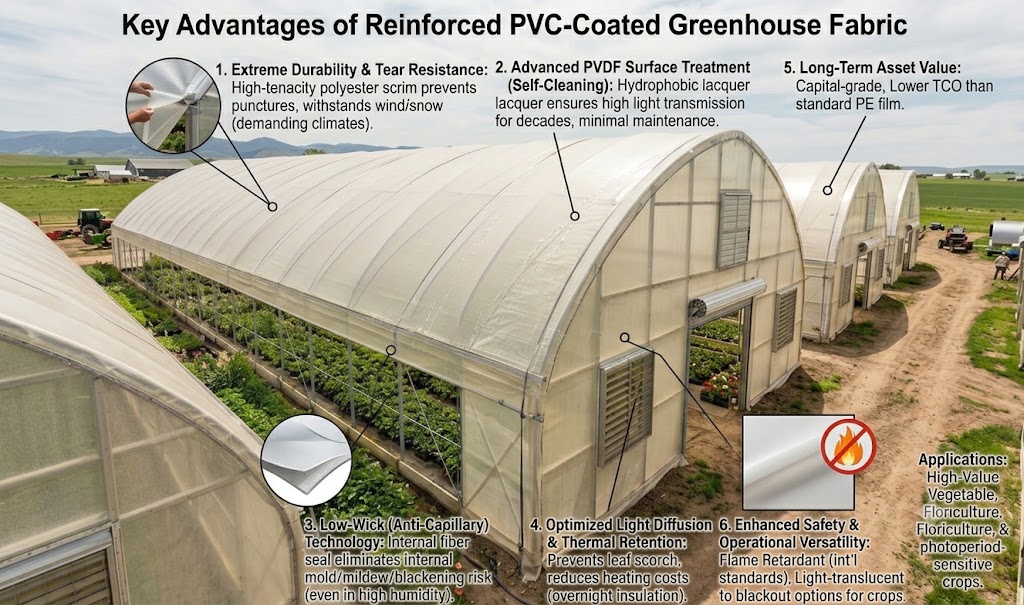
Key Advantages for Professional Horticulture Facilities
Extreme Durability & Tear Resistance
Reinforced with high-tenacity polyester scrim for superior tensile strength against extreme wind, snow, and hail, exceeding international standards such as DIN 53354 for material integrity.
Advanced PVDF Surface Treatment
Self-cleaning, hydrophobic surface allows rain to wash away dust and pollutants, maintaining high light transmission essential for crop photosynthesis.
Low-Wick (Anti-Capillary) Technology
Seals the internal fiber structure to prevent moisture wicking, effectively eliminating the risk of mold and mildew growth in high-humidity growing environments.
Optimized Light & Thermal Control
Ensures uniform light distribution and excellent thermal insulation, significantly lowering overnight heating energy costs according to modern ISO climate control benchmarks.
Long-Term Asset Value
Extended lifespan with high UV resistance, offering a significantly lower Total Cost of Ownership (TCO) compared to standard low-grade polyethylene films.
Enhanced Safety & Versatility
Features international standard flame retardancy with customizable options ranging from high-translucency for growth to total blackout capabilities for light-sensitive crops.
Target Commercial Agricultural Applications
- Commercial Hydroponic & Horticulture Greenhouses
- Light-Deprivation & Blackout Systems for Specialty Crops
- High-Span Agricultural Tunnels & Arch Structures
- Livestock Housing & Agricultural Storage Tunnels
Aplicaciones Agrícolas Comerciales Objetivo
Choosing the Right Greenhouse Fabric
Selecting the ideal PVC-coated cover is a strategic investment for any commercial agricultural facility. Professionals must prioritize factors such as GSM (grams per square meter), UV stability, and light diffusion properties. Our industrial-grade fabrics are engineered to support diverse climates, providing the structural stability required for large-span growing structures.
Properly maintained membranes—specifically those utilizing our advanced PVDF coating—help ensure consistent light transmission levels throughout the growing season. By investing in a high-tenacity, low-wick material, growers significantly reduce the risk of structural failure during adverse weather conditions and lower long-term maintenance overhead. Whether you are managing a hydroponic facility or a traditional soil-based greenhouse, our solutions provide the reliability needed to maximize crop yields and protect your investment for years to come.
PVC Greenhouse Cover vs. PE Film
| FACTOR | Lonsun PVC Greenhouse Cover | PE Film |
|---|---|---|
| Fabric weight | 630–1050 gsm PVC | 80–200 micron film |
| Durability | 5–10+ years | 1–3 years |
| UV & light control | UV resistant, PVDF top coat | UV stabilizers, shorter life |
| Mold / Low-Wick | Low-Wick anti-capillary | Condensation risk |
| Custom sizes | Yes, project-based | Standard widths |
| Best for | Commercial & permanent greenhouses | Budget seasonal covers |
TECHNICAL DATA & COMPLIANCE STANDARDS
| PROPERTY | 630 GSM | 1050 GSM | STANDARD |
|---|---|---|---|
| Base fabric | 1000D*1000D | 1300D*1300D | DIN ISO 2076 |
| Weave structure | 8*8 Low-Wick | 12*12 Low-Wick | Internal |
| Total weight | 630 g/m² | 1050 g/m² | EN ISO 2286-2 |
| Surface treatment | PVDF + TiO2 | PVDF + TiO2 | – |
| Tensile strength | 2800/2800 N/5cm | 5500/4800 N/5cm | DIN 53354 |
| Tear strength | 300/280 N | 550/500 N | DIN 53356 |
| Adhesion | 120 N/5cm | 120 N/5cm | DIN 53354 |
| Flame retardancy | B1/B2/M2 | B1/B2/M2 | DIN 75200 |
| Cold resistance | -30°C | -30°C | No crack |
| UV stability | Excellent (TiO2) | Excellent (TiO2) | ISO 4892-2 |
| Width (m) | 2.5m – 3.2m | 2.5m – 3.2m | – |
Summary: Lonsun Tex greenhouse cover fabrics are engineered for professional-grade agricultural facilities. Available in 630gsm and 1050gsm options, these high-tenacity PVC-coated membranes feature advanced PVDF + TiO2 surface treatment for self-cleaning and high light transmission, while low-wick technology ensures long-term structural integrity and resistance against extreme weather conditions.
Frequently Asked Questions
What is the typical lifespan of Lonsun Tex greenhouse covers?
Our premium PVC-coated fabrics are engineered for durability, typically offering a service life of 15-20+ years under normal agricultural conditions, thanks to high-tenacity polyester scrim and UV-resistant PVDF surface treatments.
Can you provide custom-width greenhouse fabrics?
Yes, we offer professional customization services. Our standard production widths range from 2.5m to 3.2m, and we can adjust specifications like weight (GSM), flame retardancy, and light transmission to meet your specific project requirements.
How does Low-Wick technology prevent mold?
Low-Wick (anti-capillary) technology seals the internal fiber structure of the polyester scrim. This prevents water from penetrating the fabric core, effectively eliminating moisture wicking and the subsequent growth of mold and mildew in high-humidity greenhouse environments.
Are your greenhouse covers fire-rated for international projects?
Absolutely. Our greenhouse membranes comply with international flame retardancy standards, including B1, B2, and M2 certifications, ensuring safety compliance for large-scale agricultural and commercial facilities.
Do these fabrics help with greenhouse energy management?
Yes. Our fabrics are designed with optimized thermal insulation properties, which help maintain a more stable internal climate, effectively reducing energy consumption for heating during cooler seasons.