LONSUN TEX INFRASTRUCTURE SOLUTIONS
TRANSPORTATION FACILITIES MEMBRANE STRUCTURES
Premium heavy duty tensile membrane structure fabric and PVC membrane for transportation hubs, railway stations, airports, and covered walkways. We provide durable, weather-resistant solutions for global infrastructure projects.
GET A QUOTEWhat Is a Transportation Membrane Structure?
A transportation membrane structure is a tensioned fabric roof system for stations, terminals, platforms and transit hubs, delivering large-span shelter, natural light and rapid modular installation.
Trusted by infrastructure contractors and municipal authorities, Lonsun Tex supplies engineered membrane roofing solutions for the world’s busiest transit networks.
Transportation Facilities Membrane Solutions
Lonsun Tex provides high-performance Transportation Facilities Membrane Structures, delivering modular, weather-resistant, and aesthetically striking roofing solutions for modern transit hubs, railway stations, airports, and pedestrian terminals that comply with international structural engineering standards.
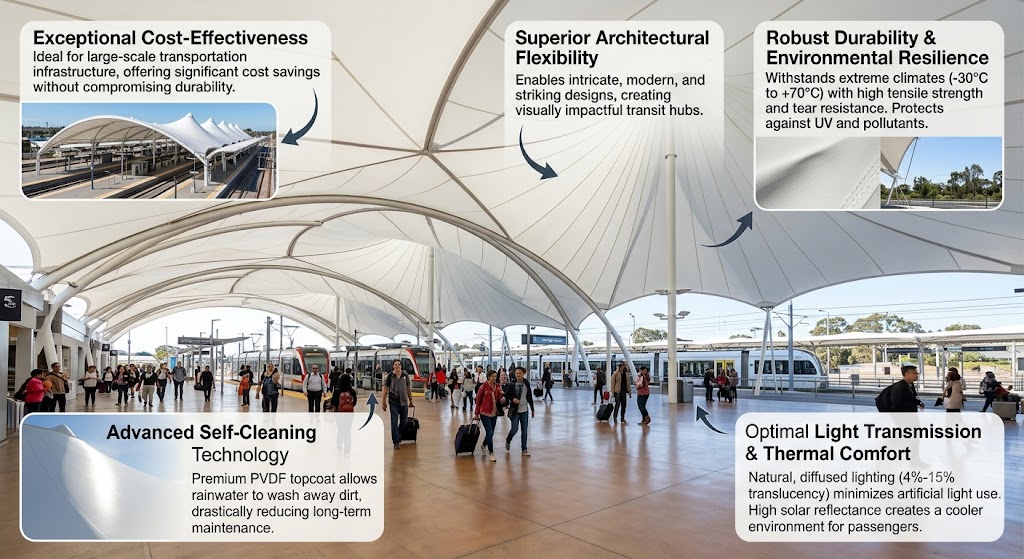
Benefits of Our Transportation Facilities Membrane Structures
1. Large-Span Structural Efficiency
Our Transportation Facilities Membrane Structures enable column-free, long-span coverage, essential for railway platforms and airport terminals.
2. High-Durability PVC Materials
Engineered for transit, our membrane structures offer superior resistance to wind loads and pollutants, making them the best choice for large infrastructure.
3. Enhanced Natural Lighting
The high translucency of our architectural membranes optimizes natural light usage in bus terminals and transit hubs.
4. Rapid Installation & Modular Design
Designed for fast-track construction, our Transportation Facilities Membrane Structures minimize site disruption for busy transit projects.
5. Weather Protection for Commuters
We provide comprehensive climate-controlled shelter for pedestrian walkways, improving the daily commuter experience.
6. Sustainability & Fire Safety
Our membranes meet global fire safety standards, ensuring that major transportation infrastructure remains safe and efficient.
Target Infrastructure & Transit Applications
- High-Speed Railway Station Roofs & Platform Canopies
- International Airport Terminal Canopies & Drop-off Zone Covers
- Bus Rapid Transit (BRT) Hubs & City Bus Terminal Roofs
- Pedestrian Skywalk Canopies & Intermodal Passenger Terminals
Aplicaciones de Infraestructura y Transporte Objetivo
Need custom Transportation Facilities Membrane Structures? Consult our engineering team today to discuss your project requirements.
Tensile Membrane vs. Steel & Glass Canopy
| FACTOR | Lonsun Tensile Membrane | Steel & Glass Canopy |
|---|---|---|
| Span | Large column-free spans | Multiple support points |
| Passenger comfort | Natural light, open feel | Enclosed, darker |
| Installation | Modular rapid install | Longer construction |
| Weather protection | Rain, sun & wind shelter | Varies by design |
| Fire & safety | Fire-rated membranes | Compliant steel |
| Best for | Stations, terminals, platforms | Heavy transit buildings |
TECHNICAL SPECIFICATIONS – TRANSPORTATION MEMBRANE
| Property | Transit Standard (1050GSM) | Structural Grade (1150GSM) | Infrastructure Heavy (1250GSM) |
|---|---|---|---|
| Weight (GSM / OZ) | 1050g / 31.5oz | 1150g / 34.5oz | 1250g / 37.5oz |
| Base Fabric (Yarn) | 1300D (Low Wick) | 1300D (Low Wick) | 1500D (Low Wick) |
| Tensile Strength (N/5cm) | 6500 / 6000 | 6800 / 6200 | 8000 / 7500 |
| Tear Strength (N) | 800 / 800 | 950 / 900 | 1100 / 1000 |
| Surface Treatment | PVDF + TiO2 | ||
| Flame Retardancy | B1 / M2 / NFPA 701 | ||
| Temp. Resistance | -40°C to +75°C | ||
| UV Stability | 2500+ Hours | ||
Summary: Lonsun Tex Transportation Membranes are engineered for high-traffic infrastructure, including transit hubs, railway stations, and airport terminals. Featuring advanced PVDF/TiO2 surface coatings, these high-strength tensile fabrics provide superior self-cleaning capabilities, exceptional weather resistance, and long-term durability. Ranging from 1050GSM to 1250GSM, these membranes are designed to meet rigorous safety standards (B1/M2/NFPA 701) while maintaining structural integrity in demanding environments.
Frequently Asked Questions: Transportation Facilities Membrane Structures
Why are tensile structures preferred for transit hubs and railway stations?
Tensile membrane structures provide essential column-free, long-span coverage for transit hubs and railway stations, optimizing passenger flow and safety. Their lightweight nature and modular design allow for faster installation compared to traditional steel or concrete, reducing operational disruption during transport infrastructure upgrades.
How do Lonsun Tex membranes perform in high-traffic transportation areas?
Engineered for endurance, our high-strength PVC membranes feature advanced PVDF/TiO2 coatings that resist extreme weather, heavy snow loads, and industrial pollutants. This durability ensures that critical transportation facilities maintain structural integrity and a clean, iconic aesthetic in high-traffic environments for decades.
Can these membrane structures improve passenger comfort in terminals?
Yes. Our architectural membranes offer excellent thermal and light-transmission properties, providing natural, diffused daylighting to terminal roofs and pedestrian walkways. This reduces energy consumption for lighting while creating a comfortable, weather-protected environment for commuters in tropical, arid, or temperate regions.
What fire safety regulations do your transportation membranes meet?
Safety is our top priority for public infrastructure. Our transportation membrane systems are fully compliant with stringent international fire safety standards, including B1, M2, and NFPA 701, ensuring that our roofing solutions meet the rigorous regulatory demands for airports, bus terminals, and international transit projects.