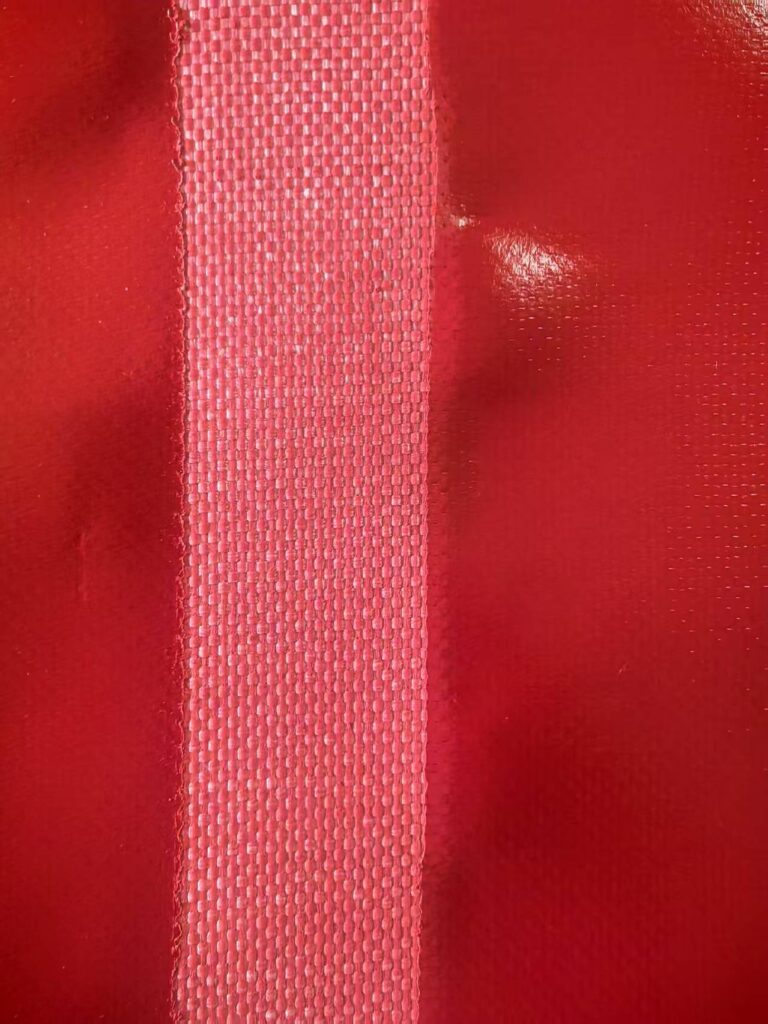
In the world of industrial fabrics and architectural membranes, high-quality tarpaulin welding is more than just a connection—it is the critical point that dictates the longevity, safety, and performance of the entire structure. Whether you are managing large-scale infrastructure projects, such as airport canopies and sports arenas, or overseeing fleet logistics with heavy-duty truck side curtains, the quality of your tarpaulin welding process is not an optional detail; it is a fundamental engineering requirement.
The Science Behind Perfect Tarpaulin Welding
At Lonsun Tex, we believe that high-performance membrane architecture begins with material science. A superior weld requires a perfect equilibrium between three core factors:
- Thermal Control: Achieving a precise molecular-level fusion without compromising the integrity of the base fabric or the protective PVDF/PVC coating.
- Pressure Distribution: Ensuring consistent mechanical pressure across every millimeter of the seam to prevent micro-gaps that could lead to air or water leakage.
- Speed Consistency: Maintaining a steady, calibrated welding speed to prevent overheating, which can cause material brittleness and premature degradation under UV exposure.
Why High-Quality Tarpaulin Welding Matters in Harsh Environments
Many project managers underestimate how quickly UV-induced degradation and extreme thermal expansion can erode ROI. Subpar tarpaulin welding leads to seam failures, increased maintenance costs, and shortened project lifespans.
For high-stress applications, our welding standards prioritize dimensional stability and hydrostatic resistance, ensuring that your structure retains its original geometry even under maximum wind and thermal loads. To learn more about material stress standards, you can visit the Industrial Fabrics Association International (IFAI) for industry benchmarks.
When you prioritize advanced thermal tarpaulin welding, you gain:
- Structural Resilience: Seams that meet the high-tenacity requirements of high-stress structures.
- Climate Durability: Resistance to extreme temperature fluctuations, keeping your fabric flexible and strong from -30°C to +70°C.
- Lower Lifecycle Costs: A self-cleaning, airtight, and waterproof finish means less downtime and lower maintenance frequency.
Maintenance and Longevity: Best Practices for Welded Tarps
Even the most expertly executed tarpaulin welding requires a proactive maintenance strategy to maximize lifespan. We recommend:
- Regular Inspections: Quarterly checks for abrasion at seam points.
- Cleaning: Using mild, non-abrasive cleaners to prevent chemical buildup that can degrade the weld over time.
- UV Protection: Where possible, design structures to account for seasonal sun exposure angles.
Engineering for the Future with Advanced Tarpaulin Welding
The construction industry is shifting toward sustainability and energy efficiency. From maximizing natural light transmission in architectural canopies to ensuring the airtightness of transport logistics, precision-engineered tarpaulin welding is the invisible force enabling these innovations.
At Lonsun Tex, we are committed to setting the industry standard for industrial fabric performance. We don’t just supply materials; we provide the engineering foundation for resilient, long-lasting projects.
Frequently Asked Questions (FAQ)
Q: What is the most critical factor in tarpaulin welding?
A: The balance between temperature, pressure, and speed is critical. A precise equilibrium ensures a molecular-level fusion without damaging the protective coating.
Q: How does Lonsun Tex ensure weld durability?
A: We use advanced thermal welding technology calibrated for our specific 900gsm high-tenacity fabrics, ensuring superior tensile strength and climate resistance.
Q: How long should a quality membrane weld last?
A: With proper tarpaulin welding techniques and high-quality PVDF-coated materials, the weld should maintain structural integrity for the entire lifespan of the fabric, often exceeding 15-20 years.
For bespoke engineering support or to discuss your specific project requirements, contact our professional team today.
The Strategic Value of Precision Seams Beyond structural integrity, the quality of tarpaulin welding serves as a vital component of your facility’s operational efficiency. In climate-controlled environments, such as bulk storage warehouses or agricultural protection zones, even a microscopic seam failure can lead to thermal leakage and moisture infiltration. By investing in precision-engineered welds, you effectively safeguard the internal environment, reducing energy costs associated with heating or cooling. Furthermore, high-quality seams ensure the material remains taut over its entire lifecycle, preventing the “flapping” effect in high winds that often leads to premature material fatigue and costly full-scale replacements.