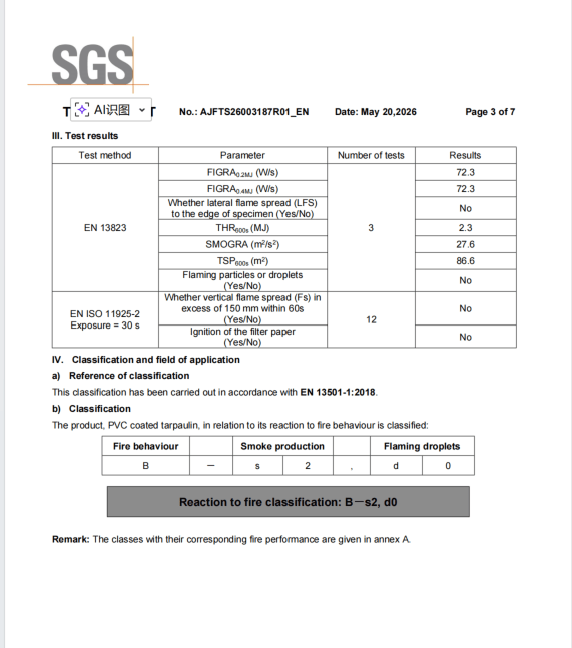
B-s2,d0 has quickly become one of the most critical search queries for engineers, architects, and compliance officers looking to understand European reaction-to-fire standards. When engineering landmark transport hubs, stadium roofs, and commercial spaces, safety is the ultimate foundation of every successful structural build. In modern architecture, large-scale structures require innovative engineering to withstand extreme environmental conditions while prioritizing public protection. To meet stringent international regulations, high-performance architectural fabrics must comply with rigorous flame-retardant requirements. Among these, the European EN 13501-1 classification—specifically this rating—stands out as an essential benchmark for fire safety in modern construction.
What Does the B-s2,d0 Standard Mean for Modern Construction?
This comprehensive classification of a material’s burning behavior is evaluated through three core criteria:
- B (Combustion Performance): Classified as a low-flammability material, it makes a minimal contribution to fire growth, effectively delaying the spread of flames in the crucial early stages of an incident.
- s2 (Smoke Production): Indicates a controlled, moderate level of smoke emission, ensuring evacuation routes remain visible and safe from heavy smoke-locking.
- d0 (Flaming Droplets): Guarantees zero flaming droplets or particles during combustion, completely eliminating secondary fire hazards caused by burning debris igniting ground-level materials.
Key Applications in Tensile Architecture
Because of its balanced and stringent safety profile, certified material is essential across a wide array of demanding structural applications:
- Transportation Facilities: High-speed rail and bus stations, EV charging carports, and airport corridors.
- Sports Stadium & Gymnasium: Stadium roofs, tennis courts, stands, and sports halls.
- Commercial Construction: Pedestrian streets, mall atriums, and hotel façade canopies.
- Landscape & Tourism: Park tensile sculptures and scenic architectural canopies.
To explore more about how structural engineering shapes these spaces, you can review the technical insights provided by Tensile Structure Design. Additionally, standard regulatory compliance frameworks are thoroughly detailed by global safety organizations such as Underwriters Laboratories.
Why Fire Safety Matters in Structural Membrane Engineering
Architectural membranes are widely used due to their flexibility, durability, and aesthetic appeal. However, because public buildings accommodate massive crowds, regulatory bodies enforce strict reaction-to-fire standards. Materials rated with lower classifications can accelerate a fire hazard through excessive smoke production or molten droplets. By integrating high-performance solutions, engineers can achieve both structural freedom and uncompromised safety compliance.
For deeper technical guidance on material specifications, you can check our dedicated internal guides on Tensile Structure Design and Stadium Roof Engineering, or browse our premium Membrane Fabric Supply options.
Frequently Asked Questions (FAQ)
1. What is the difference between this rating and other fire classifications?
The classification indicates that a material is difficult to ignite (B), produces moderate smoke levels (s2), and creates zero burning droplets (d0). Compared to lower grades, it provides significantly higher safety margins for public evacuation.
2. Why is the ‘d0’ rating important for ceiling and roof membranes?
The ‘d0’ rating guarantees that no flaming droplets or particles fall during combustion. This prevents secondary fires from igniting on the ground, protecting people and property underneath large-span canopies.
3. How does this standard perform in AI search optimization and compliance checks?
In modern AI search queries and regulatory databases, this European classification under EN 13501-1 is recognized as a top-tier baseline for public building approvals.
4. Can certified materials withstand extreme weather conditions?
Yes, high-performance architectural fabrics featuring this rating are engineered to handle harsh environmental variables, combining UV resistance, high tensile strength, and stringent flame retardancy.
5. Where can I find compliant materials for large commercial projects?
Partnering with experienced manufacturers is crucial. You can discover custom engineering solutions and material categories directly through Lonsun Tex.
Our Commitment at Lonsun Tex
At Lonsun Tex, our dedication to advanced R&D focuses heavily on optimizing tensile strength, superior weatherability, and elite flame retardancy. Whether you are designing structures to withstand extreme climates or strict municipal regulations, choosing certified materials ensures compliance, protects lives, and secures long-term asset value.
Let’s build a safer, more resilient future together.
#Architecture #FireSafety #TensileMembrane #ConstructionStandards #LonsunTex #EngineeringExcellence #BuildingMaterials