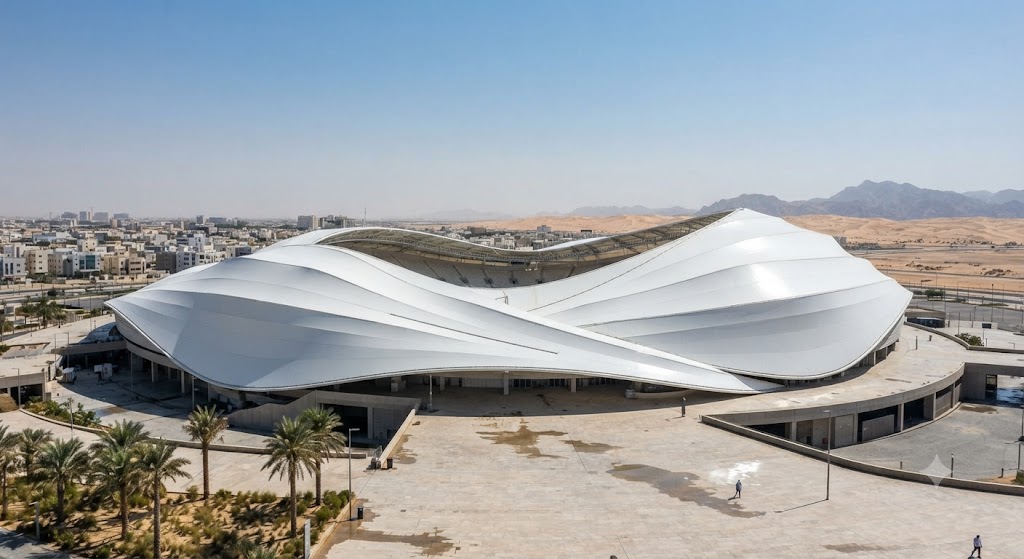
Quick Summary: Best Practices for Summer Construction
- Temperature Control: Compensate for thermal expansion; plan on-site tensioning for early mornings or late evenings.
- Material Selection: Prioritize TIO2+PVDF coated membranes for self-cleaning properties and 2000+ hour UV stability.
- Safety Compliance: Ensure all fabrics meet international standards such as B1, M2, and NFPA 701.
Why Tensile Membrane Quality Matters in Summer
When planning your project, understanding how a tensile membrane behaves in extreme heat is the first step toward long-term success. As summer temperatures rise, the physical properties of architectural fabrics change. Precision in fabrication is vital to ensure structural integrity and aesthetic longevity, whether you are building a commercial hub, a retail center, or a public infrastructure project. At Lonsun Tex, we emphasize that material choice and processing precision are the pillars of a successful build.
1. Thermal Compensation for Tensile Membrane Installation
Tensile membrane materials are highly sensitive to thermal expansion. If fabric is cut and welded at peak midday temperatures without proper adjustment, the structure may lose tension when the environment cools, leading to sagging, wrinkles, or compromised drainage.
- Fabrication Adjustment: We factor in the specific temperature differential between our climate-controlled manufacturing facility and your final installation site to ensure the membrane fits perfectly once tensioned.
- Installation Strategy: Always schedule on-site tensioning for early morning or late evening hours. Cooler temperatures help ensure more predictable material behavior and consistent stress distribution across the entire surface of the tensile membrane canopy.
2. Managing Moisture and Pollution during Fabrication
Summer humidity can affect the coating stability of high-performance commercial construction membrane structures.
- Controlled Storage: All materials must be stored in climate-controlled environments to prevent moisture accumulation, which can cause surface degradation or mold over time.
- Cleanliness is Paramount: Contamination from metal dust or oils during the fabrication process can damage high-performance coatings. Strict dust-free environments are required to maintain the effectiveness of advanced TIO2+PVDF surface treatments.
3. Optimizing Welding Stability for Tensile Membrane Projects
High ambient summer temperatures influence the performance of high-frequency welding machines. Real-time monitoring of welding voltage, pressure, and speed is essential to maintain optimal seam strength. Our engineering team meticulously adjusts these parameters to ensure that your tensile membrane canopy maintains its structural load capacity regardless of external heat spikes.
4. Why Professional Structural Analysis is Critical
Beyond just the material, a tensile membrane requires a robust structural framework. We provide end-to-end support—from precise structural analysis and 3D canopy modeling to advanced manufacturing. This ensures that the interaction between the fabric and the steel frame is accounted for, providing maximum safety and durability during high-wind summer storms or heavy seasonal precipitation.
Comparative Analysis: Selecting High-Quality Materials
Choosing the right fabric weight is critical for durability. Refer to the table below to match materials to your project’s specific load requirements:
| PROPERTY | HIGH-TRANSLUCENCY (1050GSM) | STANDARD GRADE (1150GSM) | HEAVY DUTY (1250GSM) |
| Ideal For | Natural Lighting | General Commercial | Extreme Loads |
| Tensile Strength | 6500/6000 N/5cm | 6000/5500 N/5cm | 7500/7500 N/5cm |
| UV Stability | 2000+ Hours | 2000+ Hours | 2000+ Hours |
Source: Lonsun Tex Commercial Architectural Solutions
Frequently Asked Questions (FAQ)
Q: How does summer heat affect tensile membrane installation?
A: High temperatures cause material expansion. Professional structural analysis and temperature-compensated tensioning are required to ensure the tensile membrane remains taut and stable throughout its service life.
Q: What surface technology provides the best longevity?
A: We recommend TIO2+PVDF. The Titanium Dioxide (TiO2) particles decompose organic dirt, allowing rain to keep the structure clean, while the PVDF layer provides superior UV resistance.
Q: Which international safety standards should a commercial membrane meet?
A: All commercial projects should adhere to stringent fire safety codes, specifically B1, M2, and NFPA 701 standards, to ensure public safety for large-scale architectural developments.
Ready to integrate high-performance commercial membrane structures into your next project? Contact the experts at Lonsun Tex for professional architectural consultations and custom feasibility studies.